
Rotary Dryer Selection Guide
When you consider that a typical heavy-duty rotary dryer lasts decades, the importance of picking a reliable, application-matched dryer becomes …
March 27, 2026
READ MORE

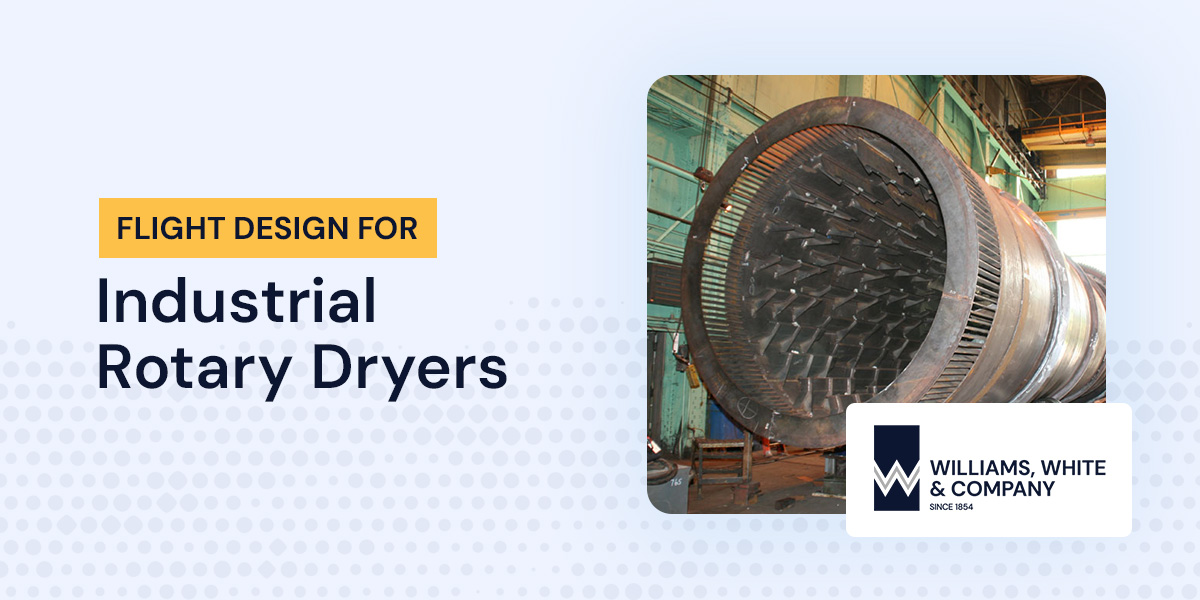
A rotary dryer's efficiency relies on its engineering, with internal flights being a crucial component. Flights, also known as lifters, create the material curtain essential for uniform drying.
This guide covers flight design selection to enable greater throughput and prevent common operational failures. Appropriate rotary dryer lifting flights enhance drying consistency, minimize operational inefficiencies and decrease downtime.
Poor flight design creates operational challenges with direct financial impact. The consequences of incorrect flight selection are measurable and costly:
Effective flights increase heat transfer by continuously exposing fresh material surfaces to the drying gas stream. This creates a uniform material curtain that enhances drying consistency throughout the drum.
The flight system also impacts material retention time, influencing both drying performance and throughput. Correct flight design affects fuel consumption and overall energy efficiency in direct-fired rotary dryer systems.
Rotary dryer flight design dictates how material is lifted, cascaded and distributed throughout the drum. No single flight design works for every material.
Dryers often employ multiple flight styles, with configurations changing from the feed end to the discharge end to account for variations in material moisture content and flow characteristics as drying progresses.
Flight arrangement is also critical — staggered configurations establish a more consistent material curtain.
Single-bend flights provide predictable material distribution and discharge patterns. These flights offer a balance between lifting capacity and simple maintenance.
They are typically applied to granular materials with low moisture content that flow freely and do not require aggressive agitation. Operations often select single-bend designs to prevent product damage from excessive agitation.
Saw-tooth flights promote more uniform material distribution across the gas stream. The design creates multiple discharge points along each lifter, increasing surface area exposure during cascading and enhancing heat transfer efficiency.
Saw-tooth flights are effective for moderate agitation without excessive product degradation.
Hooked and double-bend flights provide greater lifting action for dense or wet materials. These designs improve showering action for products with poor flow characteristics.
They prevent material from sliding along the drum bed, a common issue with high-moisture feedstock. These flights are typically used in applications that require rigorous moisture removal.
Custom flight systems combine multiple flight profiles into a single dryer. Engineers design these systems using operational data and material testing, addressing specific material behavior at different stages of the drying process.
Custom configurations solve recurring issues such as product carryover, buildup or inconsistent moisture levels. These systems frequently improve throughput and drying efficiency without requiring a larger dryer.
Selecting the right rotary dryer flight design begins with analyzing the characteristics of the material being processed. Each variable plays a specific role in determining which flight configuration will perform best:
These variables provide the foundation for choosing the right rotary dryer configuration for your application.
Several additional considerations beyond the primary variables affect flight design selection. Each factor contributes to long-term performance and cost efficiency:
Addressing these variables requires a custom-engineered solution specific to your material and process requirements. Williams, White & Company takes a consultative approach that starts with material analysis:
When you work with Williams, White & Company, you partner with a company backed by more than 170 years of industrial manufacturing experience.
The correct flight configuration significantly impacts drying efficiency, throughput and product quality. A custom-engineered flight system offers an effective means to enhance performance and long-term efficiency. This applies whether you're designing a new rotary dryer or upgrading an existing system.
Contact our engineering team to discuss your material and explore a rotary dryer solution tailored to your process requirements.

