Forged in Wartime: How a Williams, White & Company Press Helped Keep America’s Aircraft Flying in 1944
4 MIN READ
SHARE:
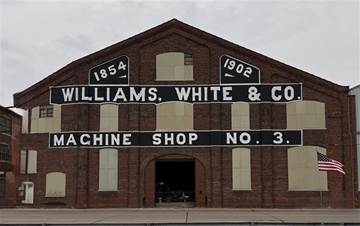
At Williams, White & Company, we've been building hydraulic presses in the United States since 1854 — through the Civil War, two World Wars, the Space Age, and beyond. Our 170-year history isn't just a number on a page. It's a record of American manufacturing at its best, built one press at a time.
Recently, we came across an order from our archives that stopped us in our tracks. In 1944, at the height of World War II, Williams, White & Company supplied a 250-ton vertical hydraulic moving down housing type press to the War Department, Army Air Forces — delivered to Wright Field in Dayton, Ohio. Its purpose? Straightening propeller blades.
Wright Field: The Heart of American Air Power
To understand the significance of this order, it helps to know a little about Wright Field itself. Located on the outskirts of Dayton, Ohio — the hometown of aviation pioneers Orville and Wilbur Wright — Wright Field was established in 1917 and quickly became the epicenter of U.S. military aviation research, development, and procurement. By World War II, it was one of the most strategically important installations in the country.
Wright Field was home to the Army Air Forces Materiel Command, responsible for the engineering, testing, and logistics of virtually every aircraft in the U.S. military arsenal. Experimental aircraft were tested there. New technologies were evaluated there. And critically, the equipment necessary to keep thousands of aircraft airworthy was procured and put to use there.
The base was a massive, sprawling complex — part research laboratory, part manufacturing hub, part repair depot. If you wanted to keep American airpower flying during the Second World War, Wright Field was where it happened. Today, the site lives on as Wright-Patterson Air Force Base, still one of the largest and most important Air Force installations in the United States.
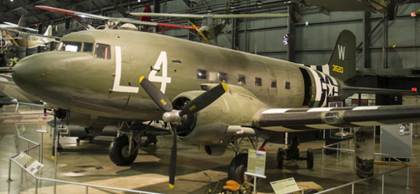
Among the aircraft whose development and operations ran through Wright Field were two of the most iconic planes of the war. The B-29 Superfortress — the most technologically advanced bomber of its era — was tested and refined with critical support from Wright Field's engineering teams. It was the B-29 that carried the war directly to the Japanese home islands, flying long-range strategic bombing missions over Japan and, ultimately, delivering the atomic bombs that brought the war in the Pacific to a close. The C-47 Skytrain, meanwhile, was the backbone of Allied airlift and logistics operations worldwide — dropping paratroopers behind enemy lines, ferrying supplies over the Himalayan "Hump" into China, and keeping Allied forces equipped and moving on every front. Wright Field played a central role in the procurement, testing, and operational support of both aircraft, making it truly one of the most consequential military installations of the entire war.
"If you wanted to keep American airpower flying during the Second World War, Wright Field was where it happened."
Priority AA-3: What It Meant to Be Mission-Critical
Our order records show that this press carried a military priority rating of AA-3 — and that designation tells you everything about how urgently it was needed.
During World War II, the U.S. government implemented a sweeping system of production and materials priorities to ensure that the war effort received what it needed, when it needed it. Under the War Production Board's priority system, manufacturers and suppliers were assigned ratings that determined their place in line for raw materials, components, and labor.
The "AA" ratings represented the highest tier of priority — reserved for equipment and materials considered essential to active combat operations. An AA-3 rating placed this press among the most urgently needed industrial equipment being produced in the country at that time. It wasn't simply important — it was considered critical to the war effort.
In practical terms, that meant Williams, White & Company was expected to produce and deliver this press as a matter of national priority, with access to the materials and resources needed to do so. The stakes couldn't have been higher.
Why Propeller Blades?
It might seem like a small detail — a press for straightening propeller blades. But in the context of World War II aviation, it was anything but small. The aircraft of the era — fighters, bombers, transport planes — depended entirely on their propellers. A bent, warped, or damaged propeller blade didn't just reduce performance; it created dangerous vibration, threw off balance, and could lead to catastrophic in-flight failure.
With aircraft returning from combat missions with battle damage on a daily basis, the ability to quickly inspect, repair, and straighten propeller blades was essential to keeping planes in the air. A 250-ton hydraulic press provided the controlled, precise force necessary to restore a propeller blade to its correct geometry — work that required both raw power and careful engineering. This wasn't a brute-force operation. It was precision manufacturing in service of national defense.
Built in America. Built to Last.
The fact that the Army Air Forces turned to Williams, White & Company for this critical piece of equipment is something we take genuine pride in. In 1944, we were already 90 years into building hydraulic presses right here in the United States — and we brought all of that experience to bear in support of the war effort.
Today, more than 80 years after that press was delivered to Wright Field, Williams, White & Company is still here. We're still building hydraulic presses in the USA. We're still engineering equipment built to exacting standards, designed to perform reliably for decades. The names and the missions have changed over the years, but our commitment to American-made quality never has.
If your operation demands a hydraulic press that's built right, built to last, and backed by over 170 years of American manufacturing heritage — there's only one place to look.